What's in the repo
The simulation side is in the repo today: generated environments start from a calibrated copy of our real workcell.
Coming soon: a toolkit for sim-to-real transfer, including the code that runs policies on the real robot and a guide to performing system identification.
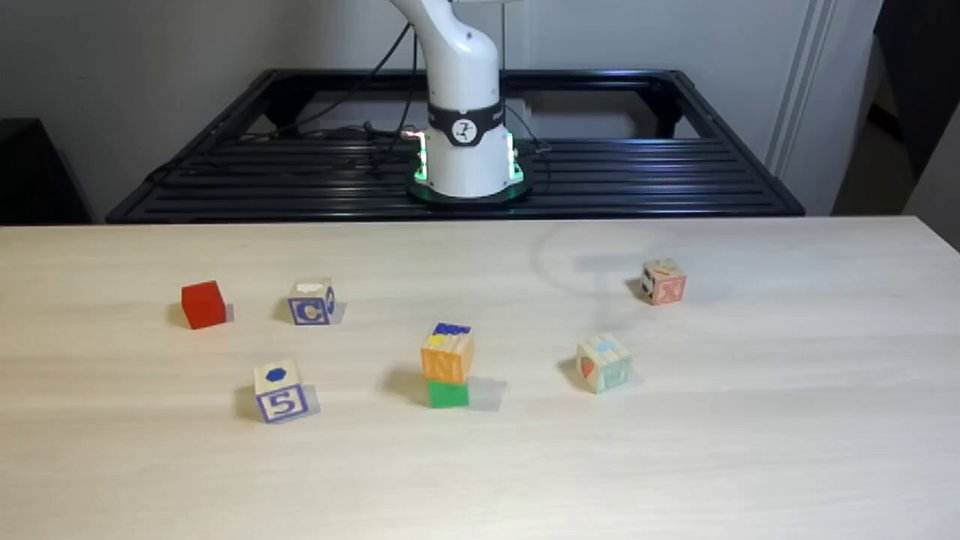
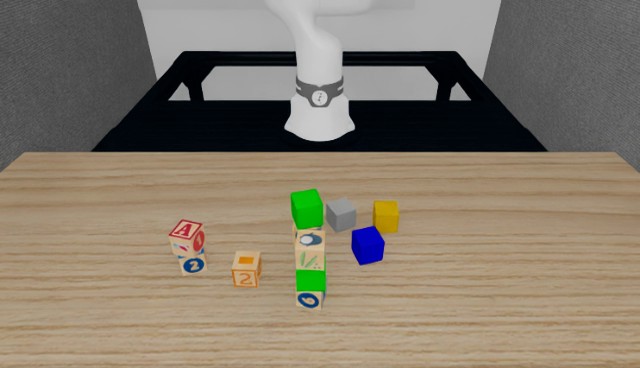
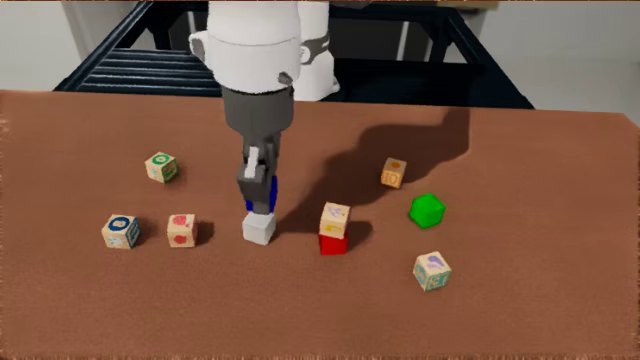
sim2real scene in simulation (right), both seen from the front camera.- The
sim2realscene is the default scene for every generated environment. It reproduces the real cell, including calibrated front-camera extrinsics and intrinsics, and datasets record it as theirscene_id. Scene and robot flags fr3_robotiq_gripper_sysidis an FR3 with a Robotiq gripper and system-identified joint armature and friction values. Robot config--use-calibrated-camerasis on by default in evals and gives every environment the real cameras' intrinsics. Cameras in evaluation
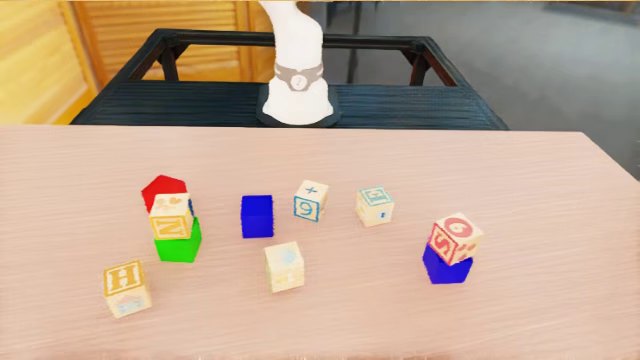
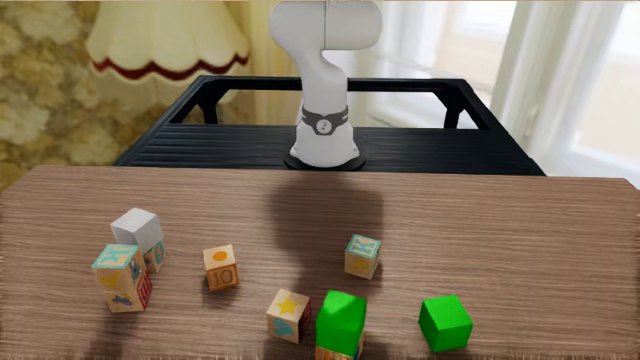
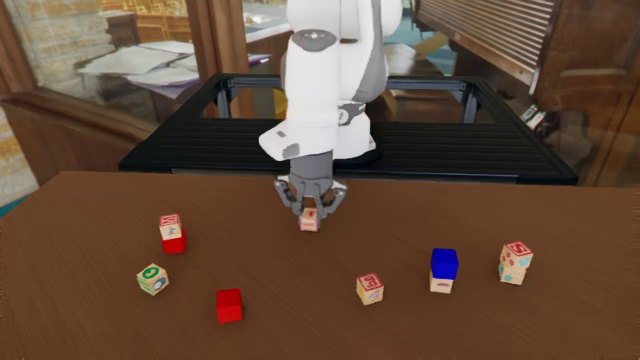
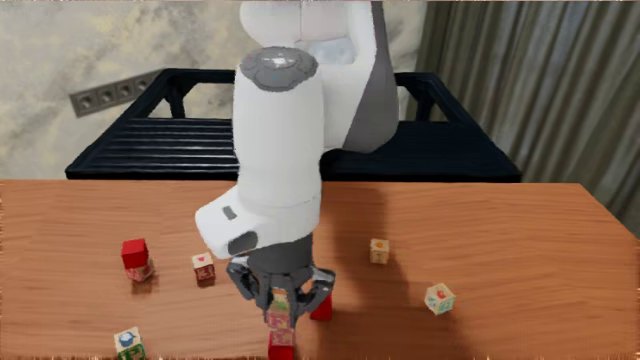
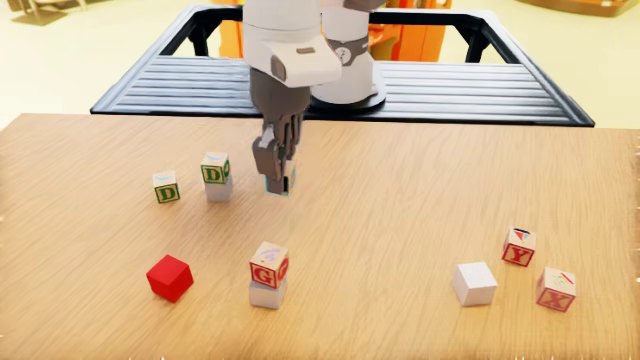
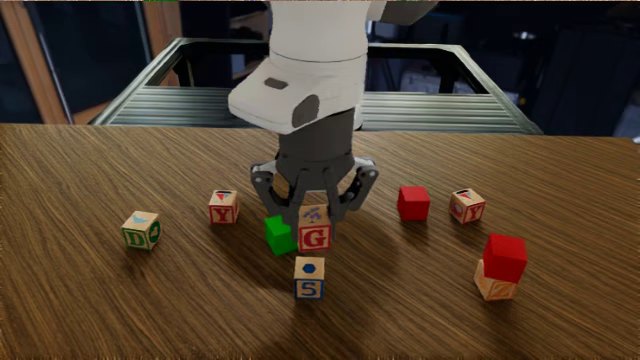
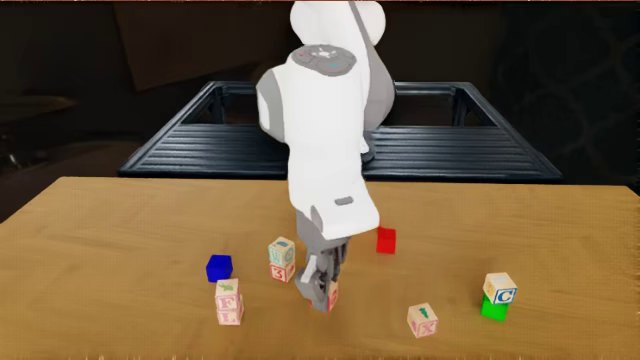
Frames from two randomized render passes of the training data.